Yes, you can drive Route 66 in 10 days, from Chicago to Santa Monica, if you sleep in the right towns and accept about 230 miles and 5 hours of driving a day. Here is the plan: Springfield (Illinois), Cuba, Carthage, Oklahoma City, Amarillo, Albuquerque, Holbrook, Kingman and Barstow, then the Santa Monica Pier on day 10. It works because you skip the Santa Fe loop and the Grand Canyon, take I-40 on the stretches where the old road is only a frontage strip or closed, and save your slow hours for the parts that are still the real thing.
I'm Helena. I drove the whole road in April 2026 for the Field Manual, and I took 23 days because I was checking every stop. Ten days is a different trip. It's tight, and it's honest only if you plan the nights before you leave. This is the version I'd give a friend who has a week and a half and wants the whole road anyway.
Can you drive Route 66 in 10 days?
You can, and it's a good trip, as long as you know what you're trading. The full historic route is 2,448 miles once you count the Santa Fe loop and older alignments. This plan follows the 1937 road straight across New Mexico, which brings it down to about 2,270 miles. Spread over 10 days, that's an average of about 227 miles a day.
I took the distances from the free trip planner at route66operator.com, which measures driving miles between 56 towns along the corridor. Its rule of thumb is 45 mph on the old road and closer to 60 on the interstate. So expect 4 to 6 hours behind the wheel each day, before any stops. Add an hour of stops for every hour of driving and you have full days, with no slack for a flat tire. If you're still deciding between 10 days and two weeks, I lay out the math for every trip length in how long Route 66 takes.
The 10-day Route 66 itinerary at a glance
Miles are driving miles from town to town. The hours are pure driving time: the low number is the fastest route, using the interstate where it runs beside the old road, and the high number is the same miles at 45 mph on the old road.
| Day | Route | Miles | Driving hours | Where to sleep | Don't skip |
|---|---|---|---|---|---|
| 1 | Chicago to Springfield, IL | 218 | 4.5-5 | Springfield | Begin sign, Gemini Giant, Pontiac museum |
| 2 | Springfield, IL to Cuba, MO | 186 | about 4 | Cuba | Chain of Rocks Bridge, Ted Drewes |
| 3 | Cuba to Carthage, MO | 202 | 4.5-5 | Carthage | Devil's Elbow, Springfield, MO |
| 4 | Carthage to Oklahoma City | 256 | 5.5-6 | Oklahoma City | Kansas, Ribbon Road, Blue Whale, Rock Cafe |
| 5 | Oklahoma City to Amarillo, TX | 263 | 5-6 | Amarillo | Route 66 Museum in Clinton, Shamrock |
| 6 | Amarillo to Albuquerque, NM | 297 | 5.5-6.5 | Albuquerque | Cadillac Ranch, Midpoint Cafe, Tucumcari |
| 7 | Albuquerque to Holbrook, AZ | 238 | 4-5.5, plus the park road | Holbrook | Petrified Forest National Park |
| 8 | Holbrook to Kingman | 240 | 4.5-5.5 | Kingman | Winslow, Crookton Road, Seligman, Hackberry |
| 9 | Kingman to Barstow, CA | 214 | about 5 | Barstow | Sitgreaves Pass, Oatman |
| 10 | Barstow to Santa Monica | 153 | 3-3.5, plus LA traffic | Trip ends | Bottle Tree Ranch, the pier |
| Total | about 2,270 | about 46-50 | 9 nights |
Two things to notice. The first three days are the shortest, on purpose: Illinois and Missouri are where the old road is most intact and slowest, and where you'll lose time without noticing. And the three long days, 4 to 6, fall where the interstate can do some of the work for you.
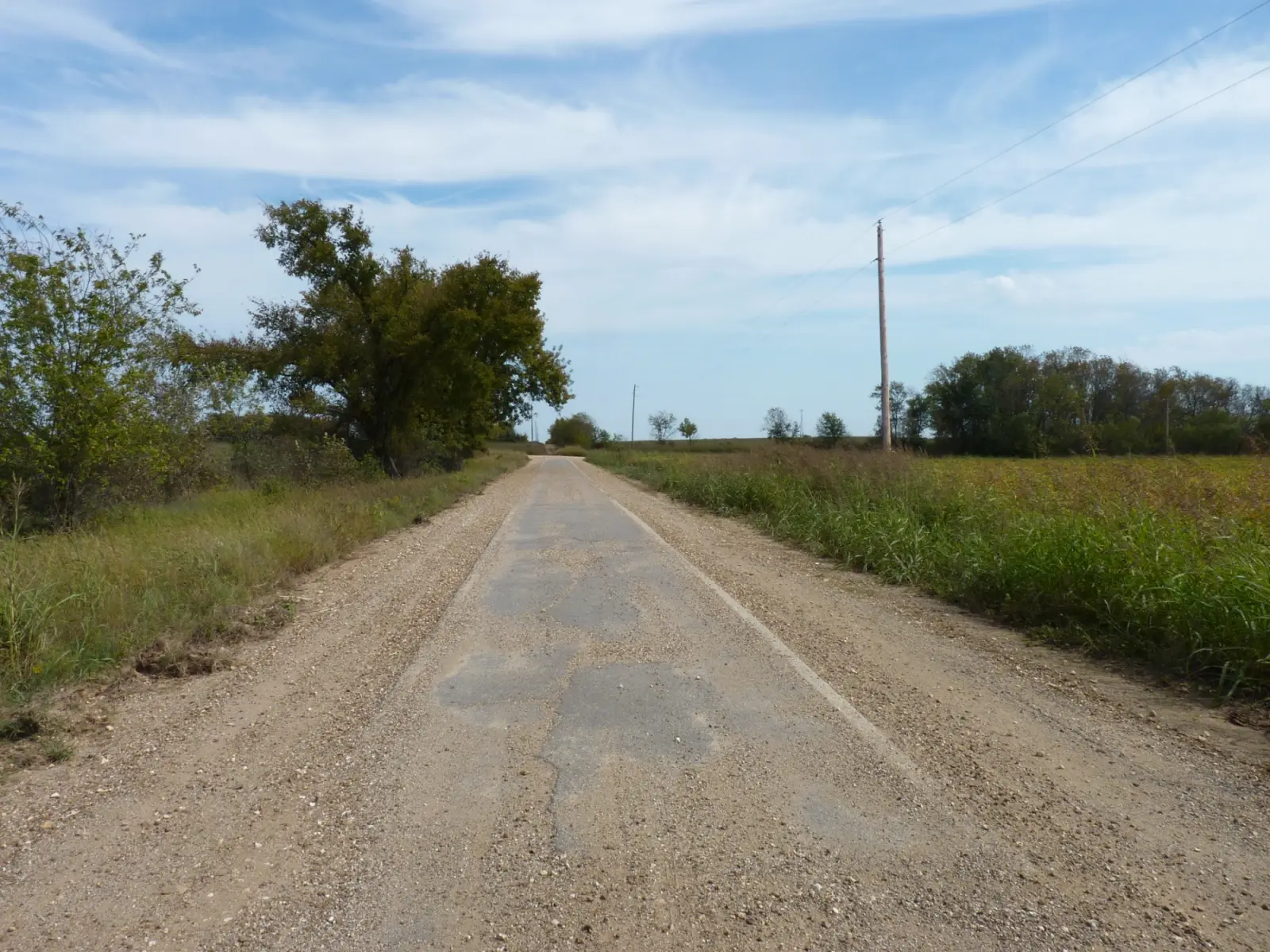
Route 66 in 10 days, day by day
Day 1: Chicago to Springfield, Illinois (218 miles)
Take your photo at the Begin sign on Adams Street at Michigan Avenue, then get out of the city before the traffic builds. If you leave late, I-55 to Joliet is the honest choice; the old road through the suburbs is slow going and has little to stop for.
From Joliet, stay on the old road. In Wilmington, the Gemini Giant stands in South Island Park, where it was moved in 2024. Pontiac's Route 66 Association Hall of Fame and Museum is free, and an hour there is the right amount on a 10-day plan. Sleep in Springfield, close to downtown.
Day 2: Springfield, Illinois to Cuba, Missouri (186 miles)
This is the short day that lets you breathe before Missouri. Stop at the Old Chain of Rocks Bridge, the 1929 crossing over the Mississippi with the bend in the middle. It's for walkers and cyclists now, so park and walk out to the turn.
In St. Louis, get a frozen custard concrete at Ted Drewes on Chippewa Street. West of the city, I-44 runs right beside the old road, and it's a fair place to make up time if St. Louis took longer than planned. Sleep in Cuba, the Route 66 Mural City, at the Wagon Wheel Motel if you can get a room.
Day 3: Cuba to Carthage, Missouri (202 miles)
This is the Ozark day, and I wouldn't touch it. Between Rolla and Lebanon, the old road drops to the Big Piney River at Devil's Elbow and crosses it on a steel truss bridge from 1923. Springfield, Missouri, is where the number 66 was chosen by telegram in April 1926. End the day in Carthage at Boots Court, a 1939 motor court.
Between Lebanon and Springfield, I-44 is close by if the afternoon is getting away from you. Keep Devil's Elbow either way.
Day 4: Carthage to Oklahoma City (256 miles)
This is the busiest day of the plan, so leave early. Kansas has only 13 miles of Route 66: see Galena and drive across the 1923 Rainbow Bridge near Riverton. In Oklahoma, south of Miami, look for what's left of the nine-foot-wide Ribbon Road and drive it slowly.
The Blue Whale of Catoosa is a quick stop just before Tulsa. Have lunch at the Rock Cafe in Stroud, built in 1939 from sandstone left over from paving Route 66, and stop at the 1898 Round Barn in Arcadia before Oklahoma City. Tulsa is the town you give up on this plan. With an 11th day, it's the first night I'd add.
Day 5: Oklahoma City to Amarillo, Texas (263 miles)
Be at the Oklahoma Route 66 Museum in Clinton in the morning. It opens at 9 a.m. Monday to Saturday and is closed on Sundays, so if day 5 is a Sunday, plan a longer stop in Shamrock instead. Clinton is about 90 miles from Oklahoma City, which puts you there around mid-morning.
In Shamrock, see the U-Drop Inn and Tower Conoco Station from 1936. In Texas, the old road outside the towns is mostly the I-40 frontage road. This is the place to use the interstate: drive I-40 between towns and take the business loops through Shamrock, McLean and Groom.
Day 6: Amarillo to Albuquerque (297 miles)
The longest day, and the one where the interstate earns its keep. Start at Cadillac Ranch west of Amarillo, then have pie at the Midpoint Cafe in Adrian, at mile 1,139, halfway to the ocean. The Texas Historical Commission lists it as open seasonally, March through October.
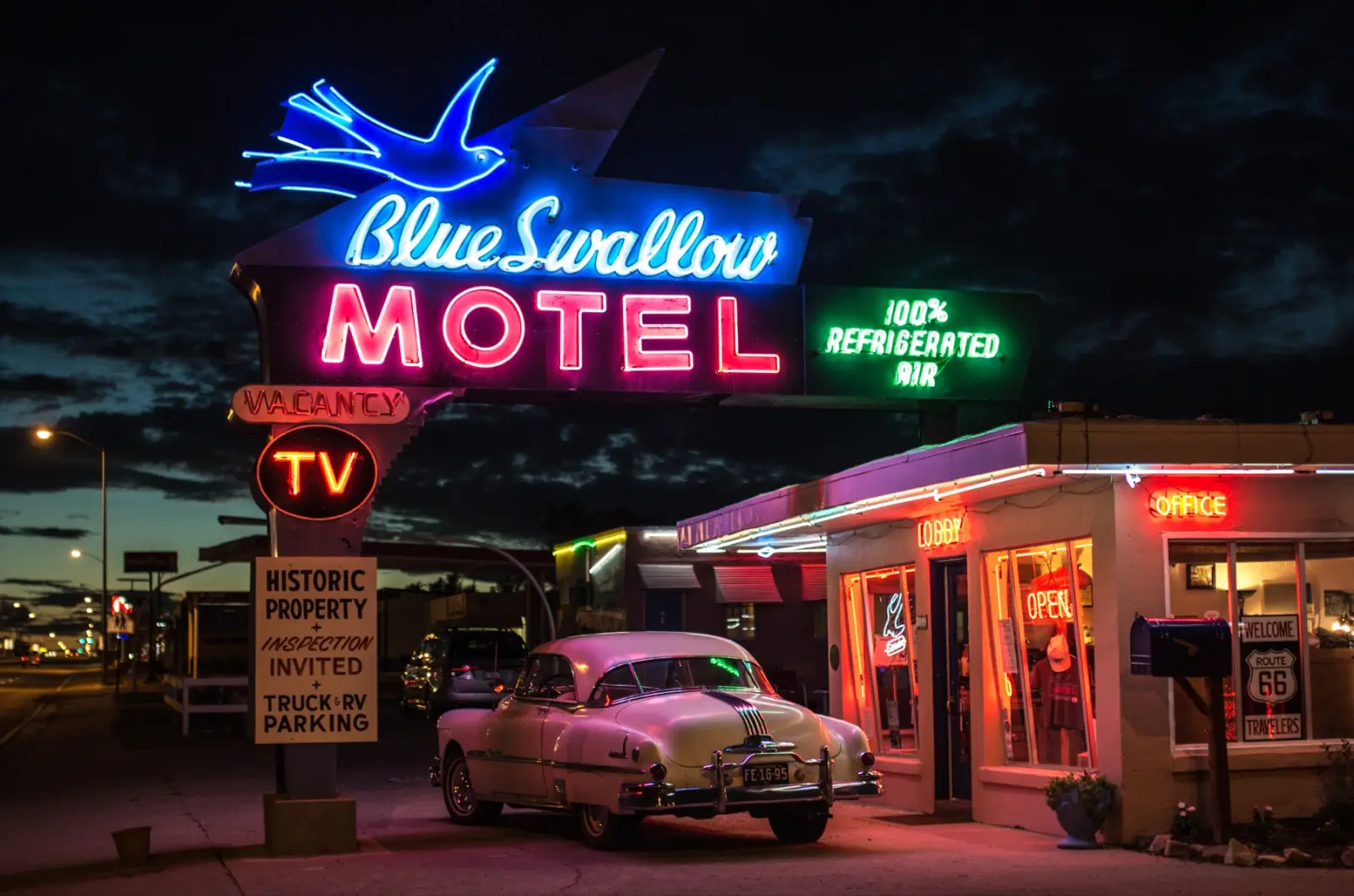
From Glenrio to San Jon, the old road is 17 miles of gravel with a condemned bridge, so take I-40. Have lunch in Tucumcari and drive past the Blue Swallow Motel, the neon sign at the top of this page. In Santa Rosa, the Blue Hole is a ten-minute stop. From Santa Rosa to Moriarty, I-40 is the sensible road on a 10-day trip, then follow Central Avenue, the old Route 66, into Albuquerque.
Day 7: Albuquerque to Holbrook, Arizona (238 miles)
West of Albuquerque the road climbs onto the high desert past Laguna and Grants, mostly beside I-40. Have lunch in Gallup instead of sleeping there; the El Rancho Hotel, opened in 1937, is worth a look inside.
The afternoon belongs to Petrified Forest National Park, the only national park that contains a stretch of Route 66. The National Park Service says the 28-mile park road takes about an hour end to end, so give it two with stops. Exit the south end toward Holbrook and sleep in a concrete teepee at the Wigwam Motel. The park closes in the evening, so check the hours for your dates on the NPS site.
Day 8: Holbrook to Kingman (240 miles)
Stand on the corner in Winslow. Between Holbrook and Flagstaff, much of the old road is gone or runs beside I-40, so the interstate costs you very little here. Williams, the last town on Route 66 to be bypassed by I-40, in October 1984, is a good lunch stop.
Then slow down. From Ash Fork to Seligman, take Crookton Road. West of Seligman starts the longest continuous stretch of the old road still in use, through Peach Springs and Hackberry to Kingman. Sleep at the El Trovatore, under its neon tower.
Day 9: Kingman to Barstow, California (214 miles)
Leave early. Climb over Sitgreaves Pass to Oatman, where the wild burros wander Main Street. The pass is paved but narrow, and vehicles over 40 feet are not allowed between Golden Valley and Oatman. Fill the tank in Needles.
Across the Mojave, the old National Trails Highway has been closed in pieces for years while San Bernardino County replaces old timber bridges. Take I-40 west to Ludlow, then the old road into Barstow, which is open. Skip the out-and-back to Amboy on a 10-day trip unless you're early and the county's closure page says the road is open.
Day 10: Barstow to Santa Monica (153 miles)
Stop at Elmer's Bottle Tree Ranch in Oro Grande, a free, two-acre forest of bottles on welded pipes. Drop down Cajon Pass and follow Foothill Boulevard and Santa Monica Boulevard to the coast. The miles are short, but the last stretch through Los Angeles can take as long as a hundred miles in Oklahoma, so leave Barstow early and aim to beat the afternoon traffic. The End of the Trail sign is on the pier.
What to skip on a 10-day Route 66 trip
Ten days works because you decide in advance what you won't do. These are the cuts I'd make, in order:
- The Santa Fe loop. The original road looped north through Santa Fe until 1937, and the later alignment saved about 107 miles. On a short trip it's the first thing to go.
- The Grand Canyon. The South Rim is 60 miles north of Williams, according to the National Park Service. That's a full extra day there and back, not a detour.
- Tulsa and Tucumcari as overnights. You drive through both at lunchtime. They're the two nights I'd add first.
- Gallup and Williams as overnights. Lunch in each instead.
- Amboy and the eastern Mojave. The road east of Amboy has closures, and the out-and-back from Ludlow is 56 extra miles on a long day.
- Long museum visits. One museum a day, an hour each. Clinton and Pontiac are the two I'd keep.
- Chicago and Los Angeles sightseeing. Neither city fits inside a 10-day Route 66 plan. Add days at the ends if you want them.
And the cuts I would not make: the Ozarks around Devil's Elbow, the 13 miles of Kansas, the Ribbon Road, Petrified Forest, Crookton Road and the Seligman to Kingman stretch, and the Oatman road. Those are the places where the old road is still the only road, and the interstate can't show you anything like them.
Where the interstate saves time without losing the best stretches
Using I-40 or I-44 on a Route 66 trip isn't cheating. Where the old road survives only as a frontage strip beside the interstate, or is closed, the interstate gives you back an hour without costing you the scenery. I explain the whole picture, state by state, in Route 66 vs I-40.
| Stretch | Day | Take | Why |
|---|---|---|---|
| Chicago to Joliet | 1 | I-55 if you start late | City and suburban traffic, few stops |
| St. Louis to Cuba | 2 | I-44 if you're behind | The old road runs right beside it |
| Shamrock to Amarillo, between towns | 5 | I-40, exit for the towns | The old road is mostly I-40 frontage in Texas |
| Glenrio to San Jon | 6 | I-40 | 17 miles of gravel and a condemned bridge |
| Santa Rosa to Moriarty | 6 | I-40 | Mostly frontage road, and it's your longest day |
| Holbrook to Flagstaff | 8 | I-40, exit for Winslow | Little of the old road is left |
| Needles to Ludlow | 9 | I-40 | Bridge closures on National Trails Highway |
The stretches where I'd always stay on the old road, even on a tight trip: Joliet to Springfield in Illinois, Rolla to Lebanon in Missouri, all of Kansas, Miami to Oklahoma City, Ash Fork to Kingman, and Kingman to Needles over Sitgreaves Pass.
Your phone will fight you on this. Map apps don't treat Route 66 as one road and will draw the fastest line, which is almost always the interstate. That's why the Route 66, The Definitive Field Manual has 169 maps and 105 GPS waypoints I recorded on the road in April 2026: you tap the point where the old road leaves the interstate instead of hoping the app picks it.
What you gain with 11, 12 or 14 days
If you can find more time, add it where the 10-day plan is thinnest:
- 11 days: split day 4 and sleep in Tulsa. Carthage to Tulsa and Tulsa to Oklahoma City are both short, easy days.
- 12 days: also split day 6 and sleep in Tucumcari, at the Blue Swallow if you can book it.
- 14 days: that's my 2-week Route 66 itinerary, which spreads the same road over about 165 miles a day and adds nights in Tulsa, Clinton, Tucumcari, Gallup and Williams.
Can you do it west to east?
Yes. Read the table from the bottom up. Cross the Mojave on day 2 and leave Barstow at first light, before the desert heats up. The long days in Texas and New Mexico land in the middle of the trip either way. Price your one-way rental in both directions, because the drop fee can change with the direction.
Book the nights first
On a 10-day trip there is no slack, so the nights decide whether it works. The small motels in Cuba, Carthage, Holbrook and Kingman have few rooms, so book those first and build the rest around them. My list of the best Route 66 motels has notes for each state.
Check your dates against the centennial calendar too. Route 66 turns 100 on November 11, 2026, and a festival can fill every room in a small town. The centennial events calendar lists them. If you want to see where every town falls before you lock it in, I put the whole road on one page in the Route 66 map with cities.
Ten days is enough to drive all of Route 66 and see the parts that matter. It isn't enough to see everything, and that's fine. Pick your nine nights, keep the slow stretches slow, and let the interstate carry you through the rest.